The AVEXA Guide
Bucharest, like a local.
The neighbourhoods, the landmarks, the tables worth booking — and how to move through the city like you have been here before.
Bucharest rewards the curious.Romania's capital is a city of grand boulevards and hidden courtyards, Belle Époque palaces and brutalist landmarks, late dinners and longer mornings.AVEXA's apartments sit right in the Bucharest city center — so this guide starts where you will be standing.
The neighbourhoods
Old City Center (Lipscani) is the historic core: cobblestoned, pedestrian, and loud in the best way after dark.Stavropoleos Monastery, the century-old Caru' cu Bere, and a hundred terraces sit within a few minutes' walk.
Calea Victoriei is the city's most elegant axis, running past the Athenaeum, the former Royal Palace, and a long run of boutiques and cafés.It is the address to stay on if you want grandeur on your doorstep.
Universitate is the geographic heart and main transit hub — the National Theatre, the university, and a metro interchange that puts the whole city within reach.
Piața Romană and Dorobanți, just north, are quieter and leafier — business-and-embassy territory with some of the city's best independent restaurants nearby.
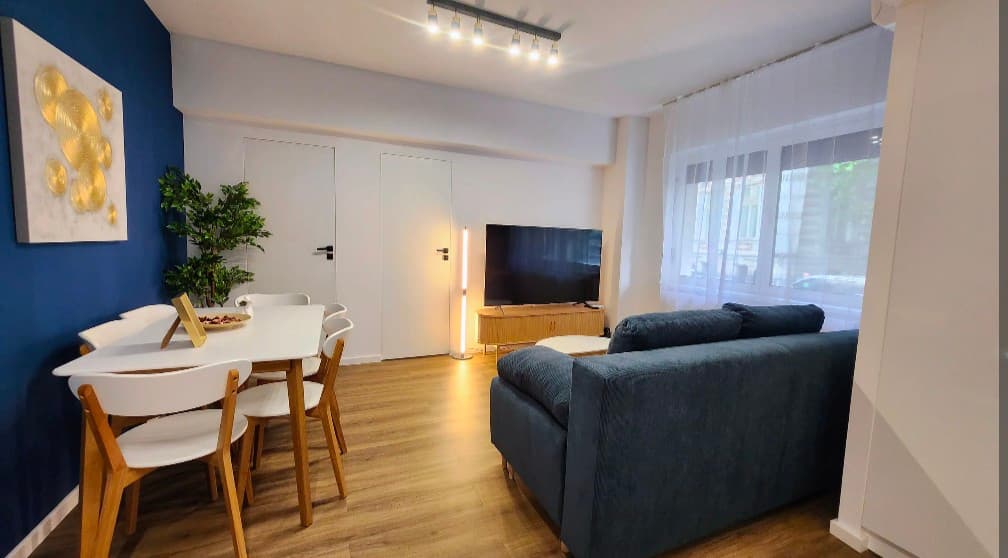
Every AVEXA suite sits in one of these districts.Browse all locations to pick your corner of the city.
What to see
The Palace of Parliament is the colossal seat of power that anchors the city's south — best appreciated on a guided tour, or from the long boulevard that leads up to it.
The Romanian Athenaeum is the most beautiful concert hall in the city, steps from the National Museum of Art of Romania in the former Royal Palace on Revolution Square.
Cișmigiu Gardens are made for a slow afternoon; King Michael I Park and the open-air Village Museum are an easy half-day, with the Arcul de Triumf on the way.
Cărturești Carusel, a light-filled bookshop in a restored 19th-century building, is worth the detour even if you never open a Romanian title.
Where to eat & drink
Eat Romanian at least once: sarmale (stuffed cabbage rolls), mici (grilled minced meat), and a sour ciorbă.Caru' cu Bere, a century-old beer hall, is touristy and wonderful in equal measure.
Bucharest's specialty-coffee scene is genuinely good — you are never far from a serious flat white in the centre.After dark, the Old Town hides cocktail bars behind unmarked doors.
For produce and atmosphere, Obor is the oldest and largest market in the city.For a proper dinner out, the Dorobanți and Floreasca districts hold most of the standout tables.
Getting around
The centre is walkable end to end.For longer hops, the metro (lines M1–M5) is fast and cheap, with Universitate and Piața Romană the most useful central stops.
Trams and buses fill the gaps, and ride-hailing (Bolt, Uber) is inexpensive and everywhere — you will rarely wait more than a few minutes.
From Henri Coandă (Otopeni) airport, the 783 express bus and a direct train both reach the centre; a ride-hail takes 30–45 minutes depending on traffic.
Day trips
The Carpathians start about two hours away.Sinaia's Peleș Castle is the fairy-tale highlight; Bran Castle and the medieval streets of Brașov together make a full, rewarding day.
Closer in, Snagov lake and its island monastery are an easy escape from the summer heat.
When to visit
Late spring (April–June) and early autumn (September–October) are the sweet spots — warm, green, and made for terraces.Summer runs hot and lively, with festivals and late nights; winter is quiet, atmospheric, and festive around the holidays.
Good to know
- Currency
- Romanian leu (RON).Cards work almost everywhere; keep a little cash for markets.
- Language
- Romanian.English is widely spoken in the centre, especially by younger people.
- Tipping
- Around 10% in restaurants when the service is good.
- Power
- 230V, Type C/F plugs — the standard EU two-pin.
Stay in the middle of it.
Design-led apartments in the heart of Bucharest, booked direct — with the best rate reserved for members.